Who wrote this: the ACC Solutions Team. This page summarizes Cleveland Codified Ordinances Chapter 3106 (sections 3106.02 and 3106.03), the City of Cleveland Vacant Properties page, Cleveland Water's winterizing pipes and home tips pages, and the winterization standards in HUD's Handbook 4000.1 (last revised August 12, 2026), all read November 26, 2026. It is general information, not legal advice.
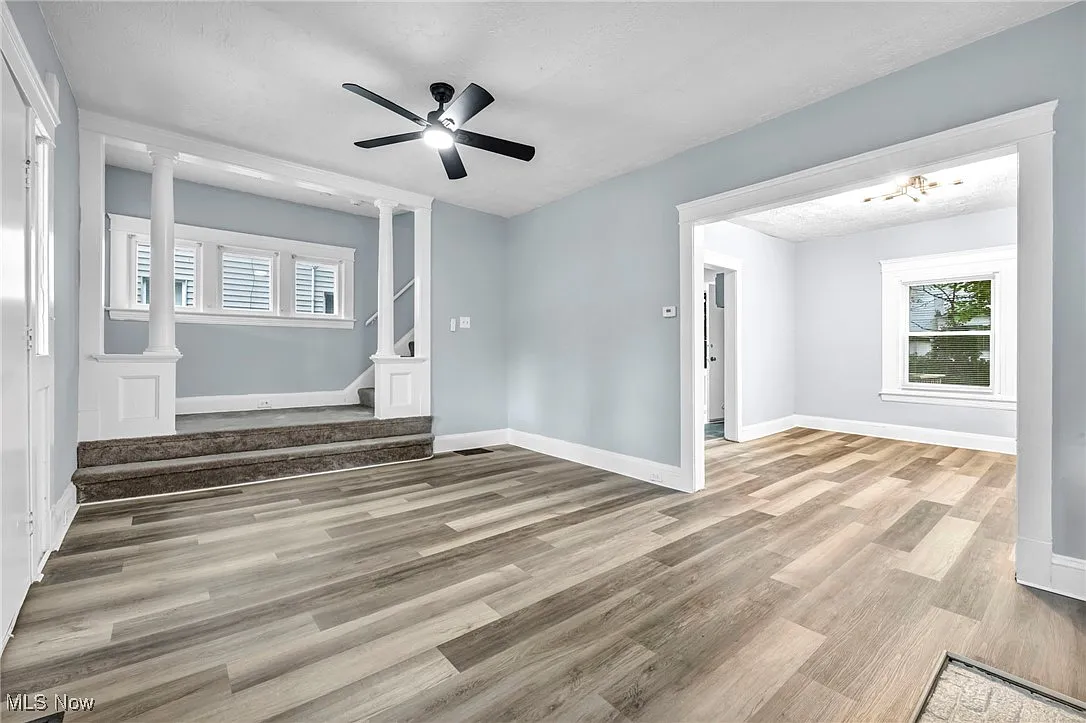
Heat on or drain down: which plan fits your vacant rental?
Most freeze damage in empty rentals comes from a half plan: the heat was turned low and nobody checked it, or the water was shut off but the lines were never drained. Choose one:
| Plan | Fits when | What to watch |
|---|---|---|
| Heat on | A short vacancy between tenants, a rehab with crews working inside, an attached unit or a building with shared systems | The furnace has to keep running. A failed furnace or a gas shutoff no one notices freezes the pipes. |
| Full drain-down | A long vacancy with no work planned, or a house waiting on a sale or a rehab start in spring | Every line, trap, tank and heating loop has to be drained, and the system has to be brought back carefully. |
Cleveland Water's rule of thumb fits both: when a home will be empty for several days, either turn the water off at the main valve and drain the outside faucets, or keep the thermostat at 55 degrees or higher.
If you're rehabbing over the winter, the trades need heat and water, so heat on is the usual plan until the work stops. A drain-down comes after the last trade leaves.
What Cleveland's vacant building code requires
Section 3106.02 lists the duties of whoever is responsible for a vacant building. One of them is that the property "must be properly winterized," including:
- the proper disconnection of water supply and drainage systems
- making sure HVAC systems are functional and properly maintained
- temporarily discontinuing or adjusting utility services
- keeping the exterior clear to guard against ice buildup and other hazards
- security measures to deter and prevent unauthorized entry
The same section asks for weather-tight exteriors and roofs and a building secured against entry. Those matter for freezing too, because a broken window lets cold air reach the pipes.
Registering a vacant rental with the City
Section 3106.03 requires the responsible party to register the vacant building with the Director of Building and Housing and keep the registration current. The City's Vacant Properties page sets out the rest:
- The annual fee is $70 per unit for buildings with 1 to 3 dwelling units, and $1,000 for commercial and industrial structures, which includes residential buildings with 4 or more units.
- Commercial and industrial structures may also need a cash bond.
- Owners who don't live in Cuyahoga County or the surrounding area must name a Local Agent in Charge who is responsible for the property's condition.
- Registration is done online through the City's Accela portal.
- Violations are fined $200 to $1,000 per offense, and each day a violation continues is a separate offense.
Two details owners often miss. A building with several residential units where at least one unit is occupied is not a vacant building under 3106.03, so an empty unit in an occupied double doesn't trigger registration, but its pipes still freeze. And since February 6, 2026, the City no longer requires an exterior inspection before the sale of a vacant 1 to 3 unit home, but registration is still required.
Checklist for a heat-on vacant rental
- Thermostat at 55 degrees or higher, and the cabinet doors under sinks left open so heat reaches the pipes.
- Gas and electric accounts kept active in the owner's name, so a shutoff notice reaches you, not an empty mailbox.
- Sump pump in place and working, since it needs the power on.
- Hoses disconnected and outside spigots shut off and drained.
- Pipes in unheated areas such as the basement, crawl space or garage wrapped in foam tubing or heat tape, with no gaps.
- Drafts sealed and broken windows repaired.
- Main water shutoff found and labeled, so anyone at the property can turn it off fast.
- A written plan for who checks the property, how often, and what they record, such as the thermostat reading and any water on the floor.
Checklist for a full drain-down
HUD's Handbook 4000.1 sets the winterization standard FHA mortgage servicers must follow on vacant homes. You aren't bound by it as a private owner, but it is a useful list.
For water, plumbing and heating it requires shutting off or disconnecting the domestic water supply at the curb, draining all plumbing and heating systems, and making sure every toilet is cleaned and emptied. It also says not to cut water lines or remove water meters unless the local authority requires it.
- Water shut off at the curb. Cleveland Water can turn water off or on for a small fee; see its home tips page.
- Gas or power to the water heater turned off before the tank is drained.
- All supply lines drained, starting with faucets on the top floor and finishing at the lowest point.
- Toilet tanks and bowls emptied, and fixture traps dealt with so no standing water is left to freeze.
- Hot water or steam heating systems drained by a licensed heating contractor, because a boiler loop is not a sink line.
- Active piping capped or valved, and nothing cut.
- A note at the main valve and the water heater saying the property is winterized and the date.
HUD also says to winterize again if the first winterization stops working, for example after a break-in. The same goes for any owner: if someone turns the water back on, the drain-down has to be redone.
When to winterize in Ohio
HUD's winterization schedule lists Ohio's required period as September 1 through April 30. That date range is written for FHA servicers, but it is a sensible window for any Cleveland owner. If a unit is going empty now, it is already inside it.
Bringing a winterized rental back online
- Close the drain valves and faucets you opened, then turn the water on slowly at the main.
- Walk every floor while the system fills and look for drips at fixtures, under sinks and at the water heater.
- Fill the water heater completely before turning its gas or power back on.
- Run each faucet until the air clears and flush every toilet.
- Restart the heat and confirm the thermostat holds before you leave.
If a line split while the house sat empty, you will find it here. In a building with several units, see what to do about frozen or burst pipes in a Cleveland rental building. If floors got wet, our sister company East Cleveland Flooring covers flooring repair after a freeze or water damage.
How ACC Solutions handles vacant rentals over the winter
ACC Solutions manages long-term rentals in Cleveland and across Cuyahoga County and coordinates rehab on the same properties. Make a winter plan, heat on or drain-down, the first decision when a unit goes vacant, because it shapes everything after it: whether trades can work, when showings can happen and what has to be undone before move-in. Our rental turnover checklist for Cleveland covers the rest of the turn.
Owners who live out of state or abroad use our rehab project coordination and management so someone local handles the property. We quote management after we know the property. We work asynchronously, so you can reach us by email or the contact form from any time zone; you don't need to catch us during Ohio business hours.
What we don't do: ACC doesn't service furnaces or boilers itself, and this page isn't a filing service for your vacant building registration. Our plumbing service is for commercial and multifamily buildings; a single-family house goes to a licensed residential plumber.
Frequently asked questions
How do you winterize a vacant rental in Cleveland?
Pick one plan. Keep the heat on at 55 degrees or higher and check it, or shut the water off and drain every supply line, fixture and heating loop. Cleveland Codified Ordinance 3106.02 requires vacant buildings to be properly winterized, including the proper disconnection of water supply and drainage systems.
Do I have to register a vacant rental in Cleveland?
Yes, if the whole building is vacant. Section 3106.03 requires registration with the Director of Building and Housing. The fee is $70 per unit a year for 1 to 3 unit buildings and $1,000 for commercial structures, including residential buildings with 4 or more units.
What temperature should a vacant rental be kept at in winter?
Cleveland Water advises keeping the thermostat at 55 degrees or higher when a home will be empty for several days, or turning the water off at the main valve and draining the outside faucets.
Is a double with one empty unit a vacant building in Cleveland?
No. Under section 3106.03, a building with multiple residential units in which at least one unit is occupied is not a vacant building, so it doesn't need vacant registration. The empty unit still needs heat or a drain-down plan.
Does ACC Solutions winterize vacant rentals?
ACC Solutions manages long-term rentals and coordinates rehab in Cleveland and across Cuyahoga County, and the winter plan, heat on or drain-down, should be the first decision when a unit goes vacant. ACC doesn't service furnaces or boilers itself. Call (216) 238-5999 or email support@accmgmtsolutions.com.
Talk to us about a vacant Cleveland rental
Call (216) 238-5999, email support@accmgmtsolutions.com or use our contact form. Tell us the property type and how long it will be empty, and we will tell you what we can take on.